13/02/2026
CATIA: The Next Chapter of C-Tech Design
C-Tech has taken a significant step forward in how it designs, validates and delivers advanced composite structures with the adoption of CATIA on Dassault Systèmes’ 3DEXPERIENCE platform.
.jpg)

C-Tech has taken a significant step forward in how it designs, validates and delivers advanced composite structures with the adoption of CATIA on Dassault Systèmes’ 3DEXPERIENCE platform.
This reflects a broader shift toward a more connected way of working, bringing design, analysis and data management together to support better engineering decisions earlier in the process.
The move to CATIA was hugely supported by Dassault Systèmes and Invenio, with Sam Sanders, Enterprise Sales Leader at Invenio, assisting with the initial setup and implementation. The transition is now being led by Director and Head of Design Riley Dean, who has been closely involved in embedding the platform into day-to-day engineering workflows.
“By bringing modelling and simulation together in one environment, we can validate designs earlier, iterate faster and push for lighter, stronger structures with a far higher level of certainty,” says Riley Dean.
.png)
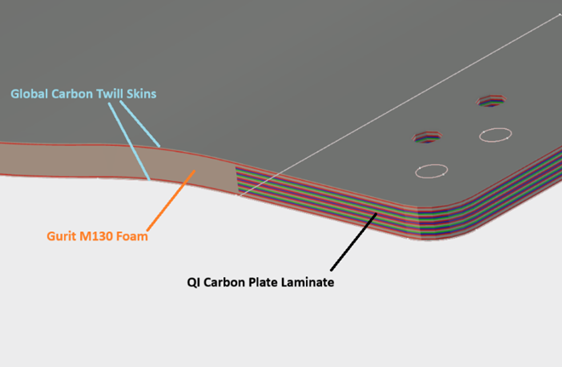
For C-Tech’s design team, CATIA represents a clear step up from traditional CAD-only tools, particularly for composite-heavy projects. The platform allows engineers to model complex geometries, define composite laminates in detail, and validate performance through integrated analysis, all within a single environment.
This shift is already changing how design decisions are made. Instead of relying on simplified assumptions or treating analysis as a final sign-off step, engineers can now use simulation earlier in the process to guide optimisation and refine designs with more confidence.
.png)
Sami Naseem, Technical Design Lead, says the tighter integration between design and analysis has had an immediate impact on both workflow and outcomes.
“It’s been a solid step up in capability,” Sami says. “Being able to properly define laminates and analyse them in the same platform means we can make better-informed design decisions and present solutions to clients with greater confidence.”
He also notes that CATIA has changed when and how analysis is used day to day.
“We’ve moved from a ‘design first, check later’ approach to a much tighter design–analyse–iterate loop,” he says. “Analysis now guides optimisation earlier, rather than being something we do at the end.”
This more integrated workflow allows engineers to update designs and re-run analysis quickly and early in the design stage. From a day-to-day perspective, Victor, Design Engineer, has seen the benefits both in capability and usability.
“The experience has been super positive I can see why there’s so much hype around the surface modelling,” Vic says. “It gives you extra control to shape parts exactly as required, and having composite design and simulation built in means faster product development overall.”
.png)
Beyond design and analysis, CATIA’s integration with the wider 3DEXPERIENCE platform is improving how engineering data is managed and shared across projects. A single data model now connects CAD, simulation and production information, making work easier to track, easier to hand over, and reducing the risk of version mismatches or lost context.
For C-Tech’s design team, CATIA is a foundational investment that supports both current performance and long-term growth as projects become more complex and globally distributed.